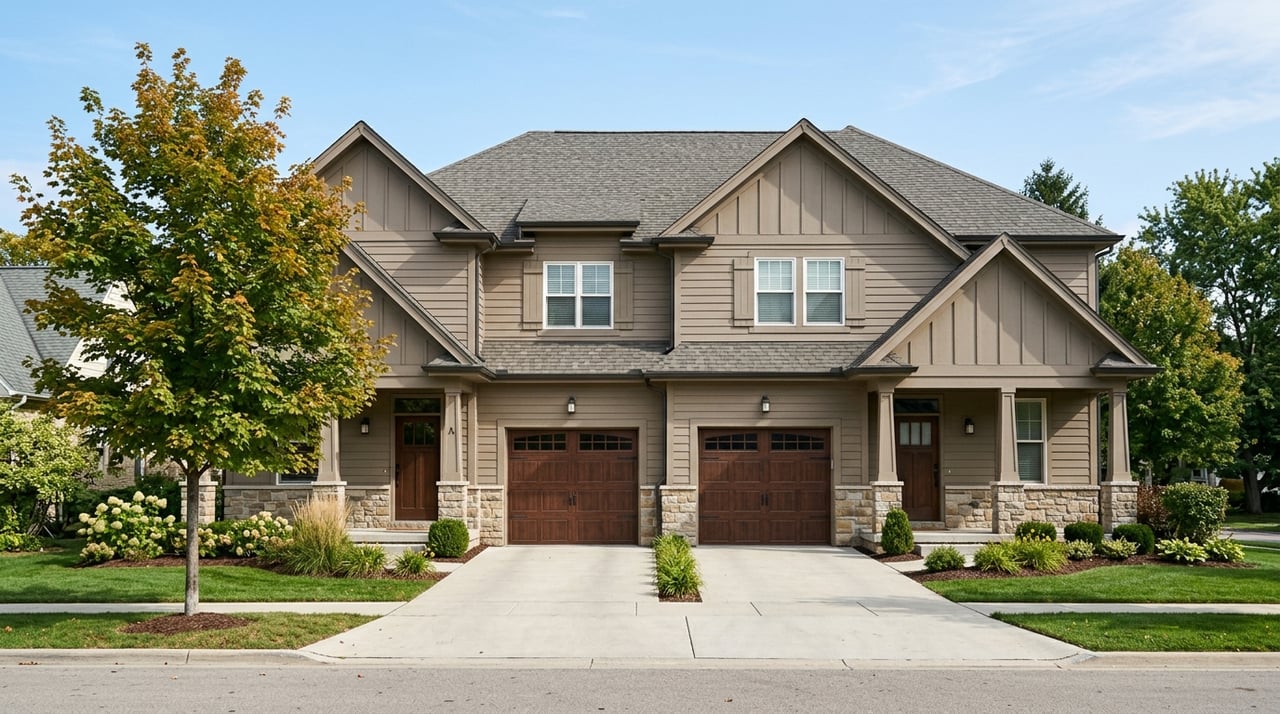
Boulder County Duplex Investment in Longmont and Lafayette
May 21, 2026
May 21, 2026
Thinking about buying a duplex around Longmont or Lafayette? You are not alone. For many buyers, a duplex offers a practical way to live in one unit, rent the other, or hold a small multifamily property in a market where single-family prices can already feel high. If you want a clearer, more grounded look at what makes these properties appealing, what the numbers may look like, and what local rules matter before you buy, this guide will help you sort through it. Let’s dive in.
Duplexes sit in an interesting middle ground. They can feel more approachable than larger apartment buildings, but they can offer more income potential than a standard single-family home. In markets like Longmont and Lafayette, that mix is a big part of the appeal.
They also tend to be scarce. Current portal snapshots show a thin active market, with Longmont showing 21 multi-family homes at a median listing price of about $635,000 and Lafayette showing 9 at a median listing price of about $733,000. Because these searches can mix duplexes with other small multifamily properties and paired-home products, those numbers are best used as a directional snapshot rather than a pure duplex-only comp set.
For many buyers, the most attractive duplex strategy is house hacking. That means you live in one unit and rent the other, using that rental income to help offset your monthly housing cost. It is one of the clearest ways to turn an owner-occupied purchase into a long-term wealth-building move.
This strategy can be more accessible than people assume. HUD says FHA down payments can be as low as 3.5% on 1-4 unit properties, and Fannie Mae has noted updated 2-4 unit financing rules that can allow low down payment options for owner-occupants. That can make a duplex purchase look very different from buying a larger commercial property.
Another key point is underwriting. Fannie Mae allows rental income from a 2-4 unit primary residence to be considered in qualifying, which can make it easier for some buyers to make the numbers work. In practical terms, a duplex is not just a home with a side idea attached. It is often treated differently from a single-family home with an accessory unit or informal rental setup.
If you are buying strictly as an investment, the appeal is a little different. The draw is usually the chance to own a small income-producing property in a strong Boulder County area with steady rental demand. That said, these deals often need careful underwriting.
HUD’s FY2025 Boulder, CO MSA Fair Market Rents list $2,059 for a 2-bedroom unit and $2,704 for a 3-bedroom unit. HUD explains these are gross rent estimates and include tenant-paid utilities other than phone, cable, and internet. They are not a promise of what any specific duplex will rent for, but they offer a conservative benchmark for evaluating deals.
Using those rent benchmarks against current portal listing medians, Longmont’s median multi-family listing price works out to roughly a 12.9x price-to-rent ratio on a 2-bedroom basis and about 9.8x on a 3-bedroom basis. Lafayette works out to about 14.8x and 11.3x, respectively. In simple gross-yield terms, that is about 7.8% and 10.2% for Longmont and 6.7% and 8.9% for Lafayette before vacancy, repairs, taxes, insurance, and financing.
The headline numbers can look decent at first glance, but they need context. Gross yield is not cash flow. Once you layer in vacancy, repairs, reserves, taxes, insurance, utilities, and debt service, many small multifamily deals in this area may be more equity-and-amortization plays than immediate cash-flow stars.
That does not mean duplex investing is a bad idea. It means you should be realistic about your goal. A property may still make sense if you want long-term appreciation, principal paydown, and the option to improve rents over time, but it may not produce a wide monthly margin from day one.
One challenge in both Longmont and Lafayette is simple availability. Duplexes are not everywhere, and not every listing in a multi-family search will be a true side-by-side or up-down duplex. Some will be quads, paired homes, or other small multifamily formats.
In Lafayette, scarcity is especially tied to zoning. The city’s comprehensive plan shows the Single Family & Two Family Residential District, or R2, at 357.6 acres, which is 5.9% of the city’s acreage. The Old Town design guidance also notes that much of Old Town is zoned R-2 and allows duplexes, while still emphasizing design standards that keep duplexes compatible in scale and appearance with surrounding residential areas.
That means your best opportunities may be very location-specific. In Lafayette especially, a good duplex search often requires patience and a close look at where two-family use is actually allowed.
A duplex can look great on paper and still disappoint you if your intended use is not allowed. That is why city rules should be part of your review before you get too far into a deal. This matters even more if your plan depends on short-term rental income or adding income from a separate unit.
In Longmont, the Land Development Code is the first place to check for where uses are allowed and what standards apply. The city says Title 15 covers zoning districts, use regulations, and development standards. If you are buying with a future use in mind, that should be part of your due diligence right away.
Short-term rental rules in Longmont are stricter than some buyers expect. The city requires a short-term rental license, annual renewal, and a sales and use tax license. The city also states that only City of Longmont residents are eligible for a short-term rental license, and some blocks in certain residential zones may require conditional-use review.
Longmont also adopted new accessory dwelling unit regulations on June 3, 2025 to comply with state law. The city says ADUs generally cannot operate as short-term rentals, except in certain planned unit developments where the site plan specifically allows that use. If your investment thesis depends on STR or ADU upside, verify that directly before closing.
Lafayette also has tight short-term rental rules. The city requires a license for rentals under 30 days, and the property must be the host’s primary residence. Applicants must identify a 24/7 local responsible party, complete a safety inspection process, pay a $200 fee, and renew every two years.
That has a clear takeaway for duplex buyers. If you are counting on short-term rental income from one or both units, do not assume it will be allowed. Confirm the property’s zoning, licensing requirements, and occupancy rules before you write the deal around that income.
In this part of Boulder County, conservative underwriting is not just smart. It is necessary. When prices are high and margins can be tight, even a small miss in your rent or expense assumptions can change the whole picture.
A useful benchmark comes from Fannie Mae’s rental-income guidance. When market rent is used from a lease or rent schedule, lenders often use 75% of gross rent to account for vacancy and ongoing maintenance. Even if you are not using that exact method for your own analysis, it is a strong reminder that projected rent should be trimmed before you build your numbers around it.
A practical underwriting approach could look like this:
If the deal only works when everything goes right, it is probably too thin. A stronger question is whether it still makes sense if rent growth slows, one unit sits vacant for a stretch, or a repair bill hits earlier than planned.
Both cities can make sense, but they offer slightly different search dynamics. Longmont appears to have a somewhat larger pool of active small multifamily listings right now, with a lower median listing price than Lafayette based on current portal snapshots. That can create more room for buyers who want options or who are trying to stay within a specific acquisition budget.
Lafayette, on the other hand, can appeal to buyers who want a tighter, more location-sensitive search and are comfortable waiting for the right opportunity. Because duplex-friendly zoning is limited, available inventory may be more constrained. When a suitable property hits the market, being prepared matters.
Not every duplex needs to be perfect, but the stronger opportunities usually share a few traits. They have clear legal use, realistic rent potential, and a layout that supports stable occupancy. They also leave room in the budget for maintenance and turnover.
As you compare properties, focus on:
That kind of disciplined review can protect you from buying a property that looks good in an online search but falls apart under closer inspection.
Small multifamily purchases can be more nuanced than standard residential deals. You are not just evaluating bedrooms, finishes, and curb appeal. You are also looking at rent assumptions, use restrictions, licensing rules, and future flexibility.
That is where local knowledge can make a real difference. In a market like Boulder County, where inventory is limited and rules can vary city to city, having a guide who understands both the neighborhood context and the investor side of the transaction can help you move with more confidence.
If you are considering a duplex around Longmont or Lafayette, working with a local team that understands investor purchases can help you weigh real opportunities against wishful math. Reach out to Zana Leiferman to talk through your goals and start your search with a clearer plan.

Our mission is to not only help our clients build wealth through real estate, but also give back to the community we live in.